Posts Tagged ‘Books’

Apr 09

11-11-11: Ulysses on the Buses

Posted by Tom Lennon in Ulysses on the Buses

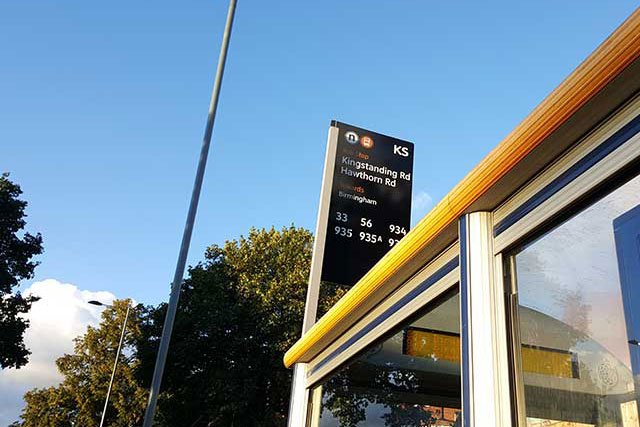
Stateless, scrawny James Joyce and his mistressmusewife, Nora Barnacle, were waiting for a number eleven omnibus in the Perry Barr district of Birmingham. It was twenty-six days, five months and one hundred and four years after 16th June 1904, although they didn’t necessarily spend all that time waiting for a bus.

At what precise location in Perry Barr was their bus stop located?

By a clay bark’s bank, where a stone lane meets a field of birch.

Do you mean by the Barclays Bank on the Corner of Aston Lane and Birchfield Road?

Um, yes.

What obsolete vernacular term for acute dental dysfunction can be used to describe the approximate time of the bus’s arrival?

Tooth hurty.

What action did the author make upon the arrival of his omnibus?

He inserted his hand mechanically into the back pocket of his trousers to obtain his senior citizen’s bus pass.

Was it there?

No. It was in the corresponding pocket of the trousers which he had worn on the day but one preceding.

Why was this quadruply irritating?

Because he had forgotten; because he had previously reminded Nora to remind him not to forget; because Nora was now reminding him that she had previously remembered to remind him not to forget; because the previous trousers were now at the dry cleaners.

Was the controversial author of such groundbreaking classics as Portrait of the Artist as a Young Man, Ulysses and Finnegans Wake entitled to free travel on bus, train and Metro services throughout the West Midlands and environs?

Yes, insofar as the author was 126 years of age and could therefore be classified as a pensioner.

Due to the aforementioned bus pass oversight, was Joyce required to tender the full adult off-peak fare?

No. The stately, plump bus driver was in a charitable mood and let him off on a technicality.

What was the technicality?

The fact that Joyce had been dead since 1941.

Briefly outline Joyce’s initial observations with regards to the distribution of passengers in the lower deck of the number 11 bus.

The lower deck contained twelve adult females (two with infants), nine adult males, and eight juveniles (five female and three male) of varying ages, races and creeds; five adults (three female and two male) were reading (or appearing to read) daily newspapers, monthly magazines or this week’s Take a Break; two adults (male and female) and one juvenile (male) were listening to music (or appearing to listen to music) on portable MP3 players; one adult (male) and one juvenile (female) were conducting (or appearing to conduct) mobile telephone conversations with unidentified parties on matters pertaining to, in the first instance, a somewhat contentious business transaction involving an otter,and, in the second, a highly detailed account of a series of regrettable and somewhat lurid romantic entanglements involving a third party known only as Our Sonia.

There were no available seats on the lower deck, then?

Indeed.

What parallel course did Joyce and Nora subsequently follow?

Starting united both at normal walking pace from the driver’s cabin, they turned right and approached the steps leading to the upper deck. Joyce, a well-mannered man, insisted that Nora go first; Nora, a feminist icon, insisted that Joyce go first. He eventually acquiesced, for fear of getting a punch on the nose.

What change in circumstance almost thwarted their ascent?

The vehicle’s sudden and unexpected transition in relative state from at rest (statum) to moving (agitato) caused Joyce to lose his footing on the narrow stairwell, ricochet off the handrail and launch into a form of graceless backflip commonly referred to as arse over tit (ineptio).

What prevented Joyce from sustaining a serious head injury?

The fact he collided, face first, into the ample cleavage of his mistress, Nora Barnacle.

What was Nora’s initial reaction to this?

NORA: Get off me Jim, ye wee skitter! I’m not falling for that one again!

What was crestfallen (and chestfallen) Joyce’s initial reaction to that?

Shock: embarrassment: shame: mild titillation: guilt: a profound sense of irony.

Why irony?

Because he had now done by accident something that he had previously done on purpose; because when he previously did it on purpose he pretended it was an accident.

What was the origin of this hitherto intentional stair-stumbling, cleavage-colliding phenomenon?

A high risk seduction stratagem Joyce called The Epiphany Accelerator.

Where and when did this previously happen?

With Nora, along a set of stone steps in Ringsend, Dublin, on 16th June 1904.

Shall we move on?

I think we should.

Were there available seats on the upper deck?

There were.

Where did Joyce and Nora decide to sit?

On the left hand side of the deck, at an equidistant point between a cackle of truants sitting on the back seat and a skinnylooking galoot and his girlfriend sitting at the front.

Why did Joyce take an irrational dislike to the skinnylooking galoot?

He was making witless remarks, scribbling furiously in a note pad and looked like a blogger.

What course did the number 11 omnibus subsequently follow?

Travelling in a south-easterly direction at an average speed of 26 mph, it left the field of birch and its broken librubble and followed Aston Lane’s Path, past Roddy Tufnol’s factoray and the new 24 our tescosuperstore.

What was the skinnylooking galoot’s reaction to the broken librubble?

- Where the fuck did that go?

What was the skinnylooking galoot’s reaction to the new tescosuperstore?

- Where the fuck did that come from?

What was Joyce’s reaction to the skinnylooking galoot’s reactions?

He let out a pair of audible tuts.

Was Joyce the first great 20th century novelist to have used the number 11 bus despite being dead?

No.

Can you elaborate on your answer?

Can you be more specific with your question?

Alright, then. Was Joyce the first dead 20th Century Modernist author to use Birmingham’s number 11 bus?

No. Ernest Hemmingway spent some time on the Outer Circle route during an otherwise regrettable trip to Birmingham.

Why was the trip regrettable?

He didn’t realize the Bull Ring was a shopping centre.

Mar 26

Read Yourself RAW

Posted by Tom Lennon in Robert Anton Wilson

I’m currently re-reading – for the umpteenth time, I might add – the great (and, sadly, late) Robert Anton Wilson’s first Cosmic Trigger book. While the title might seem a tad hokey and dated (it was written in 1977), the book itself remains fiendishly clever, gleefully provocative and side-splittingly funny. Like most of RAWs oeuvre, it contains such a generous mindbending-idea-to-page ratio that he makes most other writers, philosophers and social commentators seem cognitively tight-fisted by comparison.

Anyway, a particular passage jumped out at me today. Let me share it with you:

Everybody nowadays thinks they must have an “opinion” on everything, whether they know anything about it or not. Unfortunately, few people know the difference between an opinion and a proof. Worse yet, most have no knowledge at all about the difference between a merely legal proof, a logical or verbal proof, a proof in the soft sciences like psychology, and a proof in the hard physical-mathematical sciences. They are full of opinions, but they have little ability to distinguish the relative degree of proof upholding all these various opinions.

We say “seeing is believing”, but actually, as Santayana pointed out, we are all much better at believing than at seeing. In fact, we are seeing what we believe nearly all the time and only occasionally seeing what we can’t believe.

RAW was very good at codifying, clarifying and articulating the thoughts (and, sometimes, the intellectual prejudices) that many of us have from time to time. What he says here may seem fairly self-evident, at least conceptually.

He also, however, had a mischievous gift for planting in his readers’ heads nasty little neuro-linguistic cluster bombs with time-delay fuses. In the example cited above, we all encounter people/groups/institutions who seemingly can’t distinguish between an “opinion” and a “proof” (let alone make a distinction between the different types of proof…) every time we pick up a newspaper, listen to a politician or subject ourselves to the BBC News website’s Have Your Say page. What’s not so easy, of course, is detecting this sort of thing in your own group, tribe or self.

That includes myself, of course.

Feb 02

Posted by Tom Lennon in Uncategorized

I wouldn’t normally do this sort of thing, but this evening I’ve been reading The Love Song of J. Edgar Hoover by the country singer, humourist, crime novelist, politician and self-appointed cigar czar Kinky Friedman and I just had to share the following gem:

‘It is a rather tedious fact of life that most of us who are confined to the human condition spend a great deal of time wanting to be something we’re not. Or someone we’re not. The proctologist, scrupulously washing his hands before and after each patient, dreams of being Dr Albert Schweitzer. The rock star, as he worries whether to leave the Porsche with valet parking, dreams of saving the rain forest. The bank clerk dreams of embezzling a million dollars and moving to Costa Rica. The average Costa Rican dreams of moving to Akron, Ohio, and becoming a bank clerk. The many people who lead anonymous little lives long for fame. The handful of people who’ve become truly trapped in the thing that fame is, invariably long for anonymity. As far as the rest of us go, we have to deal with so many assholes every day we figure we probably should’ve been proctologists and at least get paid for it.’

Oct 15

"All that is, is metaphor"

Posted by Tom Lennon in Robert Anton Wilson

From YouTube, a condensed version of Robert Anton Wilson’s Maybe Logic DVD:

“RAW talks about the sanity of using maybe, E-Prime (the english language without IS or Being), imprinting and conditioning, optimism, awakening and how ‘the map is not the territory‘.”

Well, whaddaya know. I didn’t even know there was a Maybe Logic DVD, let alone a condensed version of it.

Robert Anton Wilson (1932-2007) will always be one of my favourite writers. I spent a large chunk of my 20s trying to hunt down and devour just about every goddamn book he ever wrote. In the days before Amazon, this was no mean feat. By contrast, I stumbled upon the above clip after spending ten minutes or so loitering on the superinformation highway.*

It’s at times like this that I love YouTube.

* Is it still called “the superinformation highway”? I’ve got a feeling that I just made myself sound very Windows 98.

Sep 23

Moby Dickheads

Posted by Tom Lennon in Uncategorized

From Variety:

Universal Pictures has made a splashy preemptive buy of “Moby Dick”, a reimagining of the Herman Mellville whale tale that Timur Bekmambetov (“Wanted”) will direct.

Studio paid high six figures to Adam Cooper and Bill Collage to pen the screenplay.

The writers revere Melville’s original text, but their graphic novel-style version will change the structure. Gone is the first-person narration by the young seaman Ishmael, who observes how Ahab’s obsession with killing the great white whale overwhelms his good judgment as captain.

This change will allow them to depict the whale’s decimation of other ships prior to its encounter with Ahab’s Pequod, and Ahab will be depicted more as a charismatic leader than a brooding obsessive.

“Our vision isn’t your grandfather’s ‘Moby Dick,’ ” Cooper said. “This is an opportunity to take a timeless classic and capitalize on the advances in visual effects to tell what at its core is an action-adventure revenge story.” ( My italics)

Jun 13

Books, etc

Posted by Tom Lennon in Uncategorized

I don’t normally do these things, but here’s a book meme I nabbed from Rol.

The rules are simple: highlight in bold the books you’ve read, bold-and-italicize the books you’d like to read again and put a line through the books you started-but-never-managed-to-finish.

Whatever’s left are books you haven’t read.

Here goes:

* Jonathan Strange & Mr Norrel
* Anna Karenina
* Crime and Punishment
* Catch-22
* One Hundred Years of Solitude
* Wuthering Heights
* The Silmarillion
* Life of Pi : a novel
* The Name of the Rose
* Don Quixote
* Moby Dick
* Ulysses
* Madame Bovary
* The Odyssey
* Pride and Prejudice
* Jane Eyre
* The Tale of Two Cities
* The Brothers Karamazov
* Guns, Germs, and Steel: the fates of human societies
* War and Peace
* Vanity Fair
* The Time Traveler’s Wife
* The Iliad
* Emma
* The Blind Assassin
* The Kite Runner
* Mrs. Dalloway
* Great Expectations
* American Gods
* A Heartbreaking Work of Staggering Genius
* Atlas Shrugged
* Reading Lolita in Tehran : a memoir in books
* Memoirs of a Geisha
* Middlesex
* Quicksilver
* Wicked : the life and times of the wicked witch of the West
* The Canterbury Tales
* The Historian : a novel
* A Portrait of the Artist as a Young Man
* Love in the Time of Cholera
* Brave New world
* The Fountainhead
* Foucault’s Pendulum
* Middlemarch
* Frankenstein
* The Count of Monte Cristo
* Dracula
* A Clockwork Orange
* Anansi Boys
* The Once and Future King
* The Grapes of Wrath
* The Poisonwood Bible : a novel
* 1984
* Angels & Demons
* The Inferno
* The Satanic Verses
* Sense and Sensibility
* The Picture of Dorian Gray
* Mansfield Park
* One Flew Over the Cuckoo’s Nest
* To the Lighthouse
* Tess of the D’Urbervilles
* Oliver Twist
* Gulliver’s Travels
* Les Misérables
* The Corrections
* The Amazing Adventures of Kavalier and Clay
* The Curious Incident of the Dog in the Night-Time
* Dune
* The Prince
* The Sound and the Fury
* Angela’s Ashes : a memoir
* The God of Small Things
* A People’s History of the United States : 1492-present
* Cryptonomicon
* Neverwhere
* A Confederacy of Dunces
* A Short History of Nearly Everything
* Dubliners
* The Unbearable Lightness of Being
* Beloved
* Slaughterhouse-five
* The Scarlet Letter
* Eats, Shoots & Leaves
* The Mists of Avalon
* Oryx and Crake : a novel
* Collapse : how societies choose to fail or succeed
* Cloud Atlas
* The Confusion
* Lolita
* Persuasion

* Northanger Abbey
* The Catcher in the Rye
* On the Road
* The Hunchback of Notre Dame
* Freakonomics : a rogue economist explores the hidden side of everything
* Zen and the Art of Motorcycle Maintenance : an inquiry into values
* The Aeneid
* Watership Down
* Gravity’s Rainbow
* The Hobbit
* In Cold Blood : a true account of a multiple murder and its consequences
* White Teeth
* Treasure Island
* David Copperfield
* The Three Musketeers

Looking at it, I can’t help but feel an initial twang of intellectual insecurity. Surely I should have read more than that? There’s certainly plenty of books in the list I’d like to read at some point. For one thing, I’d like to read more Dickens: I read Bleak House in my early 20s and Oliver Twist when I was about 11. As I approach the closing overs of my third decade I’d like to read some more.

Then I look at the list again and don’t feel so bad.

As Rol said:

The only thing that disturbs me about whoever put this list together is that it features THREE books by Neil Bloody Gaiman, yet nothing by Douglas Coupland, Haruki Marukami, Jack London, Stephen King, Ray Bradbury, Raymond Chandler, Chuck Palahniuk, Iain Banks, or any number of other writers I might name.

Personally, I don’t have a problem with Neil Gaiman – he’s an immensely talented and charismatic fella. But the inclusion of three of his novels (American Gods, Anansi Boys and Neverwhere) is probably a bit much. A certain James Augustine Aloysius Joyce also has three books on the list. Does that mean that the author of Ulysses, Finnegans Wake and Portrait of the Artist as a Young Man had no greater an impact on literature than the author of Sandman, Violent Cases and Secret Origins Special #1?

I also thought it odd that both The Fountainhead and Atlas Shrugged were on the list. I learnt about Ayn Rand and Objectivism via Rorschach from Watchmen and Steve Ditko comics, so I can’t help but feel that two Ayn Rand novels are two too many. If you’re an Ayn Rand fan, though, try not to judge me too harshly. I know what you guys are like.

Like Rol, though, I can’t help but notice what’s been left out of the list. As well as the authors he mentions, if the list also included – say – some Phil K Dick and some Robert Anton Wilson then there’d be a lot more bold type up there.

Probably some italics, too.