Here’s my second batch of favourite films of the last decade in haiku-form, which covers number 75 through to 51.

For 100 through to 76 scroll up or go here.

More to come…

_____________________________________________________

75.  Drag Me To Hell (dir. Sam Raimi, 2009)

Raimi’s zeitgeist surf

As bank clerk is damned

Due to Evil Debt

74.  The Bourne Identity (dir. Doug Liman, 2002)

New ‘JB’ in town

It’s those initials again!

Bond and Bauer – meet Bourne

73.  Gone Baby Gone (dir. Ben Affleck, 2008)

Those Affleck brothers

Adapt Boston-set thriller

(Look out for Omar!)

72.  The Wrestler (dir. Darren Aronofsky, 2009)

Rourke drifts to glory

With tale of aging fighter

Who’s your (Big) Daddy?

71.  Donnie Darko (dir. Richard Kelly, 2002)

Post-modern ‘Harvey’?

Quantum theory for kids?

There’s no ‘F’ in ‘Chance’

70.  Chopper (dir. Andrew Dominik, 2000)

Real-life Oz hard man

And his mad horse-shoe moustache

(Hope he don’t read this)

69.  The Proposition  (dir. John Hilcoat, 2006)

From Bad Seed Nick Cave

Comes a Down-Under Western

That’s straight-up and true

68.  Dead Man’s Shoes  (dir. Shane Meadows, 2004)

Bloody homecoming

For Staffs’ Robert DeNiro

(East Midlands Western)

67.  Zatōichi  (dir. Takeshi Kitano, 2004)

Beat Takeshi’s ode

To sight-impaired Samurai

Cuts, slices, dances

66.  Persepolis  (dir. Vincent Paronnaud/Marjane Satrapi, 2008)

Cartoon slice of life

That’s rich in humanity

And opens our eyes

65.  Zoolander (dir. Ben Stiller, 2001)

Male model mischief

As Stiller’s dumb looker thwarts

Photogenicide

64.  Grizzly Man  (dir. Werner Herzog, 2006)

Herzog’s odyssey

Smarter than average doc

Bear necessity

63.  Kung Fu Hustle  (dir. Stephen Chow, 2005)

Martial Art Slapstick

From Shaolin Soccer guy

(Loony Tu-Manchu)

62.  Unbreakable  (dir. M. Night Shyamalan, 2000)

M. Night got it right

With indestructible Bruce

Make a sequel, now!

61.  Hannibal  (dir. Ridley Scott, 2001)

Sequel to Silence

Operatic Grand Guignol

(Love story, of sorts)

60.  Ocean’s Eleven  (dir. Stephen Soderbergh, 2002)

Soderbergh remake

Tops Rat Pack original

Slick, frothy and fun

59.  Team America: World Police  (dir. Trey Parker, 2005)

Top-shelf Thunderbirds

Tackle the War on Terror

Fun, with strings attached

58.  Wallace & Gromit: The Curse of the Were-Rabbit  (dir. Steve Box/Nick Park, 2005)

A man and his dog

In Horror fromage homage

Plasti-scene stealers!

57.  Gangs of New York  (dir. Martin Scorsese, 2003)

Marty’s Good Fellows

An underrated epic

Stove pipe hats at dawn!

56.  Man on Wire  (dir. James Marsh, 2008)

Towering saga

Walks a dangerous tightrope

But maintains balance

55.  Sideways  (dir. Alexander Payne, 2005)

Breezy road movie

A boozy mid-life crisis

Excellent vintage!

54.  Hulk  (dir. Ang Lee, 2003)

Arthouse blockbuster?

They said: ‘Don’t make it, Ang Lee!’

But I still like it

53.  Into the Wild  (dir. Sean Penn, 2007)

Lyrical portrait

Of doomed real-life rebellion

Arctic retreat

52.  Coffee and Cigarettes  (dir.  Jim Jarmusch, 2004)

Unhealthy vignettes

With Jack, Meg, Iggy and Tom

Always makes me smile

51.  Being John Malkovich  (dir. Spike Jonze, 2000)

A big-screen version

Of Beezer comic’s ‘Numskulls’

(Unofficially)

What follows is the first part of the hideously overdue rundown of my Top 100 favourite films of the last decade. Not a Top 20, not a Top 50 but a Top 100. You can see why I’m doing this in installments.

Most lists like this are published in late-December or early-January, but most lists like this don’t contain lovingly hand-crafted haiku summaries. You get what you wait for. This delay has also given me the chance to catch up with films released in 2009 that I didn’t manage to catch last year. That helps to explain why some films included in this list didn’t appear in my Top 10 Films of 2009. That, and the fact I’m pathologically fickle.

Of course, strictly speaking, the first decade of the twenty-first century started in January 2001 and ends later this year. In that sense, then, this list has actually come early. The only problem with following that line of thought, however, is that I’d have to reconfigure the chart to include films that haven’t been made yet. That’s too much hassle.

The dates I use are UK theatrical release dates, which are often later than US release dates. As a result, this list contains films you may think belong to the previous decade.

I sympathise with these films. I’m often accused of belonging to a previous decade, too.

__________________________________

100. 3:10 to Yuma (dir. James Mangold, 2007)

Cowboys Crowe and Bale

Evoke a simpler era

(Train arrives on time)

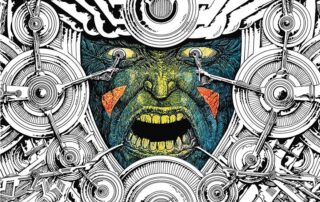
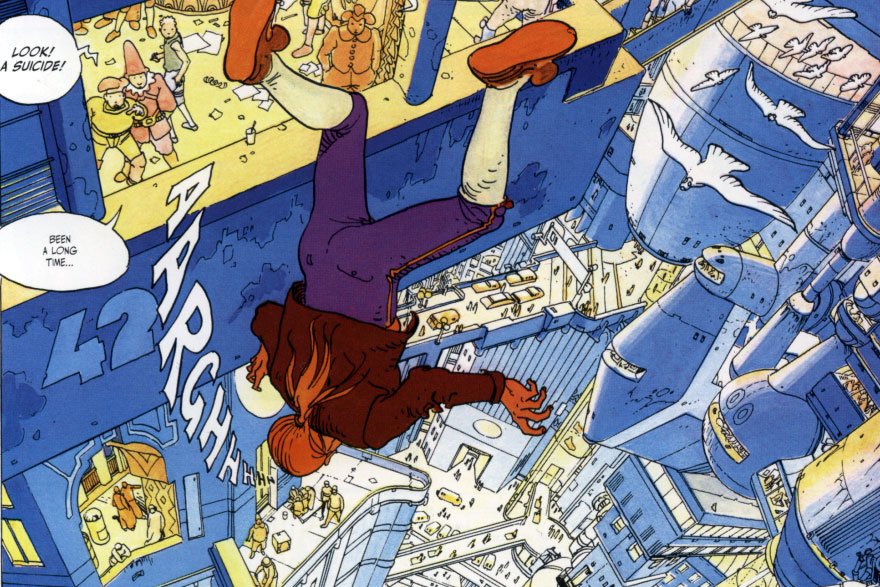
99. Moebius Redux: A Life in Pictures (dir. Hasko Baumann, 2007)

French comix legend’s

Influence is everywhere

We live in his world

98. Watchmen (dir. Zack Snyder, 2009)

Caped Citizen Kane?

Not quite, but it sure does try

Heroic attempt

97. The Fog of War: Eleven Lessons from the Life of Robert S. McNamara (dir. Errol Morris, 2004)

War and remembrance

From US politics giant

Life lessons linger

96. Infernal Affairs (dir. Wei-keung Lau/Alan Mak, 2004)

Hong Kong cop and crook

In deep cover collision

There will be bullets

95. Ghost Dog: The Way of the Samurai (dir. Jim Jarmusch, 2000)

Urban warrior

Finds Zen in a pigeon loft

(He could have found worse)

94. Sin City (dir. Robert Rodriguez/Frank Miller, 2005)

Miller’s comic noir

Faithfully cut-and-pasted

Rourke’s Marv steals the show

93. Tropic Thunder (dir. Ben Stiller, 2008)

Actors’ film folly

As they stumble into war

Year’s funniest film

92. Casino Royale (dir. Martin Campbell, 2006)

James Bond is re-Bourne

Exchanges gadgets for grit

He’s blonde now, you know

91. Big Fish (dir. Tim Burton, 2004)

Shaggy dog story

Brings the best out in Burton

(Sequel: ‘Cardboard Box’)

90. Public Enemies (dir. Michael Mann, 2009)

Mann’s gangster epic

Is a fedora-clad ‘Heat’

(The film, not the mag)

89. Insomnia (dir. Chrstopher Nolan, 2002)

Sleep deprivation

Prevents scenery-chewing

At least I think so

88. Avatar (dir. James Cameron, 2009)

J.C. rose again

With pulp sci-fi eye-popper

Tangled up in blue

87. Gran Torino (dir. Clint Eastwood, 2009)

It’s flawed, but who cares?

Clint’s in front of the camera

And that makes our day

86. Coraline (dir. Henry Sellick, 2009)

Neil Gaiman’s kids book

Becomes stop-motion delight

Sinister buttons!

85. American Splendor (dir. Shari Springer Berman/Robert Pulcini, 2004)

Not a cape in sight

As comix artist laid bare

Underground classic

84. Rocky Balboa (dir. Sylvester Stallone, 2007)

Italian Stallion’s

Final return to the ring

A Sly-con swansong

83. Lost in Translation (dir. Sofia Coppola, 2004)

Platonic affair

What’s so funny about that?

It’s Big in Japan

82. The Orphanage (dir. Juan Antonio Bayona, 2008)

Twisty Spanish yarn

With a very sad middle

Behold the sack mask!

81. Million Dollar Baby (dir. Clint Eastwood, 2005)

Clint tugs at heart strings

In girl boxer tearjerker

That still packs a punch

80. Death Proof (dir. Quentin Tarantino, 2007)

Best half of ‘Grindhouse’

Left many moviegoers cold

(Like I give a shit)

79. The Departed (dir. Martin Scorsese, 2006)

Jack’s shows a mean streak

On Marty’s gritty Mean Streets

Infernal remake

78. A.I. Artificial Intelligence (dir. Steven Spielberg, 2001)

Neo-Pinocchio

As Spielberg channels Stanley

Beautifully bleak

77. Brokeback Mountain (dir. Ang Lee, 2006)

Ang Lee’s ‘Giant’ became

A shorthand for homophobes

But what do they know?

76. Burn After Reading (dir. Ethan Coen/Joel Coen, 2008)

Coen’s strike again

Dumb idiots hatch dumb plot

It’s sadistic fun!

Feb 17

Pancake Daze

Posted by Tom Lennon in Blather

As I’m writing this its still Shrove Tuesday, albeit just barely.  As you’re reading this it probably won’t be Shrove Tuesday any more, unless I suddenly develop the ability to type at a phenomenal speed or you happen to live in a different time zone.

I never quite understood the point of Shrove Tuesday, but that’s never stopped me from celebrating it in the time-honoured fashion.  Pancakes were consumed, and they were tasty.  For that, I have Clare to thank.

As a card-carrying lapsed Catholic I’m well aware that Pancake Day traditionally falls on the day before Ash Wednesday, the beginning of the Feast of Lent.  That’s something else I’ve never quite understood.  I get the basic point of indulging yourself with tasty grub just prior to a sustained period of fasting, but why pancakes?  I don’t remember any mention of that in the Bible.

Maybe it was hidden away in some apocryphal scripture:

And on the day before Jesus was led by the Holy Spirit into the wilderness to fast for forty days, He did gather his disciples and did sayeth unto them, Who amongst you has the Jif Lemon?  And his disciples answered him, saying none amongst them had the Jif Lemon.  And Jesus did sayeth onto them, Who amongst you has the golden syrup?  And his disciples answered him, saying none amongst them had the golden syrup.  And Jesus was most displeased and did sayeth unto them, Let he who is without Jif Lemon or golden syrup caster the first sugar.

The Book of Moses Horwitz 4: 8-12

Another possibility is that Pancake Day has its roots in some lost Pagan ritual that has since been appropriated by Christianity.  Writing in the first century AD, the historian Tacitus’ account of the Roman invasion of Britain – The Agricola – mentioned the discovery of giant, abandoned, crêpe-like constructions that were built by indigenous Druids to placate the gods.  This would appear to have its roots in a similar ritual practiced in Ancient Greece, except their big, batter-based offerings were to the local god of music, fertility and theatrical criticism.

His name, of course, was Pan.

Feb 14

The Minister of Information Returns

Posted by Tom Lennon in Music

Gil Scott-Heron’s new album I’m New Here has been on heavy rotation since I bought it earlier in the week.  It’s an absolute blinder, real return-to-form stuff that I heartily and unequivocally recommend.

If you fancy listening to it yourself, an official streamed version from Scott-Heron’s new label, XL Recordings, is available online.  Here it is:

(If the above widget doesn’t appear on your browser, then you can also try here)

If you like it, then please do the decent thing and go out and buy it.  Streamed albums – official or otherwise – are all well and good, but you can’t pick them up or listen to them while you’re driving.  At least, I don’t think you can.

While we’re on the subject, I also recommend The Observer’s recent insightful article on Gil Scott-Heron, which you can find here.

Feb 11

“All in the game yo, all in the game”

Posted by Tom Lennon in TV

I came home from work today to find my wonderful stepdaughter Lily on the Internet.   She was visiting  the Disney Channel website, and – as one of those unfortunate people burdened with a certain kind of political temperament – I found myself experiencing an involuntary muscle spasm somewhere in the region of my social conscience gland.  This soon passed, however:  I may be relatively new to this parenting malarkey, but if there’s one thing I’ve learned is that smart, 6 year-old girls like Lily have little time for humourless lectures on the evils of cultural imperialism.

Plenty of time for that, eh?

Anyhow, like most websites aimed at kids nowadays, the Disney Channel features a veritable platform of games and activities that are tied-into their various spin-offs and cash-ins.  Lily was playing on one such game, which was based on a House of Mouse property that I hadn’t heard of called Sonny With a Chance.  The game looked something like this:

Appropriately enough, it was one of those mouse-driven, point-and-click affairs.  I didn’t really pay much attention to it until Lily pointed-and-clicked at one of the on-screen characters and a little pop-up avatar appeared:

I did a quick double-take.  I adjusted my glasses.  I looked again:

My arm jerked out and I pointed a trembling forefinger at the computer screen, not unlike Donald Sutherland in the final scene from Invasion of the Body Snatchers.  I nearly choked on a mouthful of tea, which was somewhat surprising as I wasn’t actually drinking tea at the time.  “Ye Gods!” I cried, “I know that man!”

That man was this man:

His name is Maurice Levy, a character from the groundbreaking crime drama series The Wire.  Levy is a corrupt and unscrupulous lawyer who spends most of the five seasons of the show defending the indefensible, negotiating plea bargains and finding legal loopholes for his clientele of drug dealers, murderers and miscellaneous no-good shits.  He’s one of the most odious, obnoxious and amoral sleazeballs to ever to have graced a TV screen.  In PR terms alone he’s set the legal profession back by centuries, single-handedly undoing all the goodwill earned by the likes of Clarence Darrow, Michael Mansfield QC and the Marvel Comics’ superhero Daredevil.

To put it another way, he’s not the kind of person you expect to see on The Disney Channel.

Of course, it wasn’t really Maurice Levy who appeared on Sonny With a Chance or its mouse-driven, point-and-click game.  It was the actor Michael Kostroff who plays the character Maurice Levy in The Wire and the character Marshall Pike in Sonny With a Chance.   Actors, you see, do this sort of thing all the time.  We should be grown-up about this and remind ourselves that just because someone who portrayed a character in the greatest crime drama in the history of television subsequently appears in a sit-com geared towards the Hannah Montana demographic, it doesn’t necessarily mean there’s any sinister connection between the two shows.

After all, it’s not the same thing as Detective John Munch appearing in Sesame Street.

Feb 06

Sesame: Life on the Street

Posted by Tom Lennon in TV

This evening’s Archive Hour on Radio 4 celebrated the 40th anniversary of the seminal children’s TV show Sesame Street. The programme featured healthy dollops of insight about the visionary goals that underpinned the show and how the Children’s Television Workshop revolutionised children’s TV through the medium of animation, bad puns and felt glove puppets. The one thing that wasn’t discussed, however, was an aspect of the show that most media pundits are either blissfully unaware of or would prefer just to ignore. I’m talking, of course, about the way in which the seemingly benign and wholesome inner city world of Sesame Street is inextricably linked to the violent and seedy inner city world of modern American crime drama.

In 2006, Sesame Street featured the following (very funny) parody of the popular drama series, Law and Order: Special Victims Unit

The green one with the shades was a Muppet simulacrum – a simuppetcrum, if you will -- of Detective John Munch, one of Law and Order’s most popular and enduring characters as played by the comedian-turned-actor Richard Belzer:

This wasn’t the first time -- or, for that matter, the last time -- that Sesame Street featured a parody of a popular cop show (cf Miami Mice from the 1980s, or the more recent RSI: Rhyme Scene Investigation). However, the appearance of the Munch character in this skit carried with it a certain troubling ontological resonance that would be lost on the typical pre-schooler, well-meaning parent or Radio 4 researcher.

Namely, that Detective Sergeant John Munch is a conduit of continuity, a notorious fictional floozy and the tart of TV crime drama.

Law and Order: Special Victims Unit wasn’t the first procedural cop show that Munch appeared in. Before that, he was a regular in the groundbreaking 90s series Homicide: Life on the Streets. During Homicide’s run, Munch made three guest appearances on the rival crime show Law and Order and, when Homicide was cancelled in 1999, he subsequently became a regular in Law and Order’s Special Victims Unit spin-off.

While actors do this sort of thing all the time, it’s pretty unusual behaviour for a fictional character. TV shows tend to exist in self-contained, self-referential worlds and Munch’s prime-time promiscuity helped to shatter this time-honoured illusion. It was a bit like EastEnders’ Phil Mitchell ordering a pint at the Rovers Return or Brookside’s Jimmy Corkhill becoming a regular on Skins. If it’s just the actor turning up in a different show then nobody really minds, but when fictional characters themselves start doing this sort of thing then it has troubling implications.

In the case of John Munch, it suggests that Homicide: Life on the Streets and Law and Order co-exist within the same fictional universe. That’s not such a big deal in and of itself as they’re both crime dramas. Thanks to the existence of the Munch simuppetcrum, however, we’re now faced with the troubling implication that both shows exist in the same fictional plane of existence as Sesame Street.

It gets worse. Not content with appearing in multiple crime dramas (including a brief appearance in a short-lived and largely-forgotten series called The Beat), fictional Detective John Munch has also branched out into other genres. He interrogated The Lone Gunmen in a 1997 episode of The X-Files and, more recently, had a cameo appearance in the cult comedy series Arrested Development.

So, thanks to John Munch – the metafictional mindfucker de jour – we now have to get our heads around a single, unified fictional universe in which the characters from Homicide, Law and Order, The X-Files and Arrested Development could theoretically interact not only with each other but with the denizens of Sesame Street.

What makes all of this even more unusual is the fact that Detective John Munch is based on a real person. The Homicide series (in which Munch first appeared) was based on a non-fiction book called Homicide: a Year on the Killing Streets by David Simon, who would later go on to create The Wire (which, in case you don’t already know, is officially the greatest crime drama in the history of television). Munch’s character was based on real-life Baltimore cop called Jay Landsman, and Simon would later go on to pay further tribute to Landsman by naming a character in The Wire after him. The real Jay Landsman – Jay Landsman Actual, I suppose – worked as an advisor on The Wire before eventually becoming a regular cast member on the show, playing a character called Lieutenant Dennis Mello (who, you guessed it, was named after another real-life Baltimore Cop).

In the penultimate episode of the final season, the comedian-turned-actor Richard Belzer made a cameo appearance in The Wire. The character he played was Detective John Munch.

This implies that even a programme that’s as highly-acclaimed as The Wire can still be absorbed into the single, unified fictional universe that centres around Detective John Munch. Furthermore, it suggests that the fictional inner city Baltimore of The Wire is just a mere Greyhound bus ride away from the fictional inner city New York of Sesame Street.

I guess it’s only a matter of time before simuppetcrums of McNulty, Stringer Bell and Omar are introduced to the world of Cookie Monster, Big Bird and Oscar.

Or, The Life Arachnid with Peter Parker.  A slyly clever parody by Jeff Loveness which -- like Anderson’s actual films -- you’ll either get or you won’t.

(Thanks to zenbullets for the heads-up.)

Feb 03

Snatch Wars

Posted by Tom Lennon in Films

I’m probably the last person in the world to see this, but here’s a tremendously funny movie mash-up that features Darth Vader reimagined by Guy Ritchie:

Updated 30th January 2010: this may seem a bit overdue, but I’ve now added Armando Iannucci’s 9th and 10th questions that were Tweeted after I wrote my original post. In light of how yesterday’s events played out, it now seems as though my additional question for readers was a wee bit optimistic. It was based on the assumption that the former vicar of St Albion would receive a thorough grilling and be deftly evasive. In the event, a deft evasion wasn’t required as the “thorough grilling” turned out to be, at best, a gentle simmering, or possibly even a fricassée.

Blair’s remarkable transformation from Zero to Nero -- as those initial physiological signs of awkward nervousness swiftly morphed into a swaggering display of unrepentant moral righteousness -- seemed to be triggered by a prompt evaluation of his opponents’ capacity to do him harm. All it took was the merest hint of hesitation, deviation or lack of focus from the panel to neutralise the threat, and the opening question managed to convey all three.

It was a bit like watching Ronnie Barker in an episode of Porridge expecting to get a incandescent rollicking from Mr Mckay, only to find out that it’s Mr Barrowclough instead.

Just for once I’m going to sheepishly pop my head over the parapets and amble awkwardly into terra incognita. Yes, I’m venturing outside of my normal comfort zone of pop culture and low humour to talk about politics

Later today, the former vicar of St Albion will be giving evidence at the Iraq inquiry. I’ve got very strong opinions about this, but I’ll let you work those out for yourself.

Now, I’m not in the habit of following celebrities on Twitter, but Armando Iannucci is an exception as he’s fiendishly smart and very funny. The modern-day Moliere has been posting a series of questions on Twitter that he’d like Tony Blair to answer. For the benefit of those who don’t follow @AIannucci, don’t do Twitter or are somewhat averse to the textese-like vowel-gutting necessitated by a 140 character limit, here’s my humble attempt at translating them into English:

  1. Was regime change one of your aims? Alastair Campbell’s diary entry for 2nd April 2002 confirms that participants at one meeting “discussed whether the central aim was WMD or regime change” and that “TB felt it was regime change” (at Iraq inquiry, former foreign minister Jack Straw said he regarded “a foreign policy objective of regime change” as “improper and also self-evidently unlawful.”)
  2. In January 2003, your foreign policy adviser Sir David Manning recorded that you were “solidly with the president” about military action with or without a second UN Resolution. If this is so, then why didn’t you tell the Cabinet or parliament that you had already made up your mind? Why did you tell the Commons as late as 25th February 2003: “I do not want war. I do not believe that anyone in this House wants war. Even now we are prepared to go the extra step to achieve disarmament peacefully”?
  3. On 24 September 2002 you told parliament that Saddam night acquire a usable nuclear weapon within “a year or two”. No substantive Intel ever supported that claim. Explain.
  4. On 7th March 2003 Attorney General Lord Goldsmith sent you detailed legal advice questioning the legality of proceeding without a second UN resolution. By 17th March he’d hardened his position, so to speak, and provided unequivocal legal backing for the war. How many people helped him revise this advice? Are you happy for them to talk to the enquiry?
  5. Did the Attorney General’s wife play any part in this change of advice? Are you happy for her to talk to the enquiry?
  6. Foreign Office lawyer Elizabeth Wilmshurst’s resignation letter was censored for “security” reasons. The suppressed passage referred to Lord Goldsmith’s aforementioned change of heart over the legality of the war. Is this really a security matter? Would it be better described as an insecurity matter?
  7. Government legal advisers said that justifying war as an act of self-defence would be illegal as there was no evidence that Saddam was planning an imminent attack. Why, then, did you not retract the 45 minute claim?
  8. Why did you you present the Attorney General’s advice to the Cabinet, the House of Commons and the military as clear and unequivocal when you knew it wasn’t?
  9. Last December, John Prescott told New Statesman magazine: “Bush is crap. You know it, I know it, the party knows it.” Why were our troops at his disposal?
  10. Did you let political considerations delay proper military planning and financing, particularly over troop equipment?

Finally, a question for you:

  1. Do you really think the former vicar of Albion will give a straight answer to any of the above?

Jan 22

The clue is in the name

Posted by Tom Lennon in Blather

Lord Chief Justice Lord Judge has been in the news a lot this week. These stories were all very serious issues that merit very serious discussion by very seriously-minded people. As I’m not a particularly seriously-minded person, however, I feel more comfortable turning my attention to something altogether more glib, trivial and frivolous.

Namely, so to speak, Lord Judge’s name.

It does seem slightly odd (to me, at least) that someone with the surname Judge ends up becoming the Lord Chief Justice of England and Wales.  This would seem to support the theory of nominative determinism, whereby a person’s surname helps to influence their choice of career.  If your surname is ‘Judge’, the theory goes, then you’ve spent so many of your formative years being referred to as ‘Judge’ that you’re going to be subliminally conditioned and/or subconsciously predisposed to pursue a career in the legal profession.   Of course, with us human critters being the fairly complex engines of infinite possibility wot we are, things don’t always work out this way.  Just ask Judge Reinhold from the Beverley Hills Cop movies.

Reinhold notwithstanding, Lord Judge isn’t the only example of nominative determinism.  I first became aware it in the 1990s when New Scientist coined the term and it subsequently became a regular topic in the magazine’s Feedback section:

We recently came across a new book, Pole Positions – The Polar Regions and the Future of the Planet, by Daniel Snowman. Then, a couple of weeks later, we received a copy of London Under London – A Subterranean Guide, one of the authors of which is Richard Trench. So it was interesting to see Jen Hunt of the University of Manchester stating in the October issue of The Psychologist: “Authors gravitate to the area of research which fits their surname.” Hunt’s example is an article on incontinence in the British Journal of Urology (…) by J. W. Splatt and D. Weedon. (Italics mine)

New Scientist – 5th November 1994

Besides Lord Judge and Messrs Splatt and Weedon, my favourite examples of possible cases of nominative determinism include the following:

And my absolute favourite:

Nominative Determinism focuses on the connection between surnames and careers, but I sometimes wonder if the influence of a person’s surname can go beyond that and have an impact on their personality type and/or character.  In this respect, the partial-to-booze chanteuse Amy Winehouse and the perpetually perky TV presenter Carol Smilie spring to mind, although I wish they didn’t.   On a personal note, in a previous job I used to regularly deal with a pair of clients called Mr R. Sole and Mr I. Wankawala.  I’m happy to say that they both lived up to their names.

And why should this just be limited to surnames?  Can a person’s first name also have an impact on their personality type and/or character?

Somehow I doubt it.   But then I would say that, wouldn’t I?