Background Image: © The Everett Collection via Canva.com
British fascist gangs of the 1930s are largely forgotten, but what can we learn from Sleazy Geezers, Tecky Brothers, and Freaky Preachers?
Introduction
Sir Archibald Flagstaff was a fascist politician who rose to prominence in 1930s Britain and was known for his unwavering commitment to bigotry, brutality, and low-impact sports. This was the era of gangs like hit TV sensation the Peaky Blinders, and Flagstaff – like so many ambitious politicians of the era – kept similar groups of sociopaths on retainer in case he ever got the chance to overthrow democracy.
Here are a few examples:
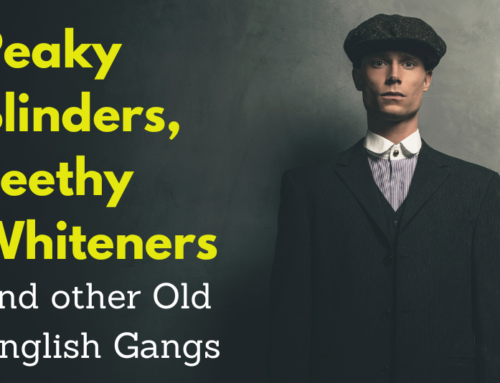
Tecky Brothers
Image: The Everett Collection via Canva.com
The Technocracy Brotherhood was a gang of successful multi-thousandaire futurists closely associated with the era’s emerging technologies, such as telegrams, transistor radios, and wireless barbed wire. They supported fascism as a transitional form of tyranny but felt that things would go a lot more smoothly once they had full control.
Gang members shared a passion for science fiction novels, especially the upbeat dystopian ones. Some even tried to turn science fiction into reality, often with disastrous results. In 1931, the inventor of the mobile telephone box, Cornelius Filibuster, was inspired by H.G. Wells’s War of the Worlds to build a giant, fully operational Martian Tripod Machine, which tragically incinerated him.
Worse was to come. Taking their cue from Jules Verne’s 20,000 Leagues Under the Sea, six brave technocrat gang members set out to explore the English Channel for mining opportunities in their custom-built submersible, Nautilus 2. Their vessel – a modified Model T Ford – sank immediately, as did the gang. A year later, another group of Tecky Brothers embarked on a mission to find their fallen comrades, but they drowned, too.
As a nation mourned the loss of these titans of industry, radical leftist artists and writers mocked the Brotherhood in the letters page of the Manchester Guardian, often in the form of tasteless single-sentence “jokes”. This infuriated the gang, who claimed that Britain’s creative industries had been held back for too long by empathy, introspection, and media literacy.
In 1932, the gang filed a patent for a hydraulic “Self-Learning Originality Piston” that would not only produce art and literature to order but also put artists and writers out of work. Flagstaff provided investment capital after struggling to find creative types willing to produce antisemitic cartoons. SLOP’s launch event was a disaster, however, as Flagstaff and other investors discovered it was just a fancy tracing-and-plagiarism engine. The machine was dismantled, and its parts were later used to construct the world’s first Speak & Spell.
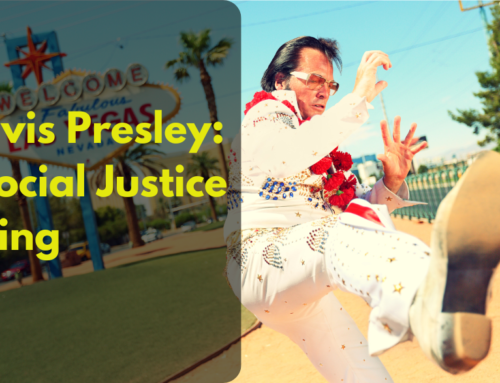
Freaky Preachers
Image: The Everett Collection via Canva.com
The Freaky Preachers were an evangelical Anglican cult who believed themselves to be God’s chosen gang. They were passionately committed to converting the British Empire to their fundamentalist vision of Christianity “by any means necessary,” which included forced conversions and backstreet baptisms.
Their leader was defrocked firebrand radiovangelist, Revd. Godfrey “Mad God” Godard, who was known for his zero-tolerance policy towards non-gang members, especially Catholics. Godard warned them that they would go to Hell, although that could be avoided by making regular payments into his divine protection racket.
The Freaky Preachers were staunch supporters of fascist leader Sir Archibald Flagstaff, whom Godard described as “more Christlike than Christ himself.” During Godard’s Church of England exit interview, an angry Archbishop of Canterbury listed Flagstaff’s extensive collection of seven deadly sins. Godard defended Flagstaff, saying, “You see a cruel, degenerate, unrepentant monster, but God sees a roguish, man-of-the-people emissary. God told me that Himself last night, just after the 6 O’clock news.”
In truth, Godard supported Flagstaff because he believed the fascist leader was so narcissistic and mad that he’d lead the country into war alongside Nazi Germany. Godard was an early advocate of World War 2, believing it would lead to Armageddon and the gang’s swift ascension into heaven, where they’d be able to grab all the best seats.
Godard confidently predicted that the world would end during the 1936 Croquet Cup Final between the Oxford Commas and the Henley Dons. According to his prophecy, the Four Horsemen of the Apocalypse would appear during halftime, and Christ’s Second Coming would take place just after the final whistle, assuming the game didn’t go into extra time. Godard and his gang were eager to finally meet Jesus and highlight some of the flaws in his teachings.
The Freaky Preachers included both men and women members, partly to set itself apart from the all-male Catholic gangs. Many women in the gang were former Gretty Garbers (see below) and could be easily identified by their cheerful, aggressive cruelty, fake performative piety, surgically altered faces, and chain-mounted crucifix weapons.
Gretty Garbers
Image: Getty Images via Canva.com
The Gretty Garbers were an all-women street gang often overlooked by modern feminist historians because of their anti-woke, politically incorrect hostility to other women’s rights.
Also known as the Black Blouses, gang members were fiercely loyal to Flagstaff, often throwing their ample inter-war undergarments at him during croquet tournaments. This greatly amused Flagstaff’s second wife, fascist fangirl Peggy Sledge, who was a bit weird like that.
The gang took their name from Hollywood actress Greta Garbo, whom Flagstaff was infatuated with. When Garbo rejected his numerous advances, the gang retaliated by writing scathing reviews of her 1932 box office hit, Perplexed Trombone. Though she tried to ignore this harassment, Garbo eventually broke her silence and demanded to be left alone. For a silent movie starlet of the era, breaking a silence was virtually unheard of.
Garbo not only inspired the gang’s name. Its members went to extreme lengths to look like her and hopefully catch the eye of their favorite philandering fascist. Plastic surgery had, of course, made significant advancements since the First World War, although cosmetic surgeons still relied heavily on plasterboard and glue. As a result, many of the gang’s “Greta Garbo Faces” resembled a shell-shocked gunnery sergeant from Wigan.
Sleazy Geezers
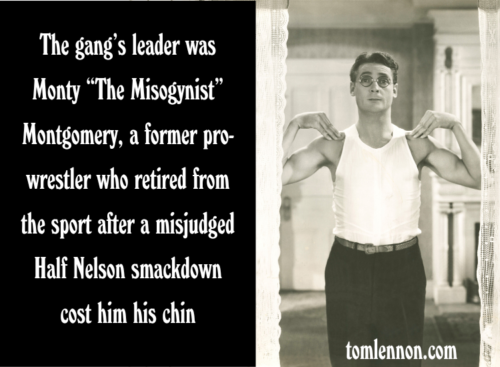
Image: The Everett Collection via Canva.com
The Sleazy Geezers were a controversial gang who believed that the British Empire was in the grip of “an epidemic of lonely gentlemen” caused by beta cuck soy boy political elites pandering to Suffragettes. They blamed overconfident women for a wide variety of social issues, including mass unemployment, industrial unrest, and premature balding.
The gang’s leader was Monty “The Misogynist” Montgomery, a former pro-wrestler who retired from the sport after a misjudged Half Nelson smackdown cost him his chin. Montgomery developed a woman-hating methodology he called “radical obnoxiousness,” which combined traditional sexism with modern bodybuilding techniques and tight clothes. He and fellow gang members delivered expensive weekend seminars at local community halls, with discounts available for early bookings.
Montgomery and his gang were popular amongst vulnerable young men still traumatized by the 1926 silent musical “Dance Lady Dance”. The film sparked riots upon its release for its graphic depiction of the Roaring Twenties, including a controversial dance number in which Clara Bow performed the Charleston with her elbows on display. Thanks to the gang, these young men no longer felt obliged to sit with their uncomfortable feelings, take responsibility for their emotional well-being, or develop a personality. Instead, they were encouraged to work on their muscles, wallow in their victimhood, and blame everything on Mary Wollstonecraft.
The gang was also known for their dubious get-rich-quick schemes involving pheromone scones and spring-loaded chest expanders. They supported Archibald Flagstaff’s fascist party after he promised to end women’s voting and restore medieval gender roles.
They all died alone.
Shrieky Grifters
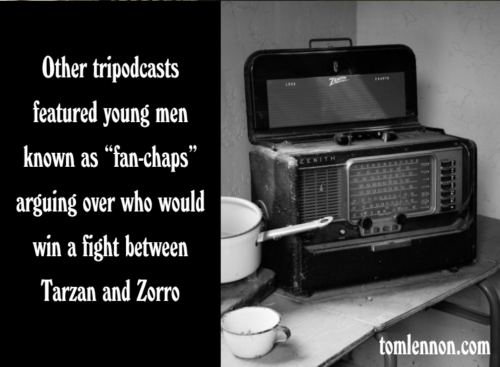
Image: Brett Sayles from Pexels via Canva.com
The 1930s saw a rise in the popularity of amateur radio. While the BBC monopolized short-, medium-, and long-wave transmissions, ham radio enthusiasts operated on obsolete tall-wave frequencies. These could only be accessed by ladders or by mounting transmitting equipment on elaborate tripods. As a result, these amateur radio enthusiasts became known as tripodcasters.
Most of these shows were fairly harmless, often featuring young women excitedly reviewing free gifts they received from British manufacturers, such as clothing, cosmetics, or steam engines. Others showcased young men known as “fan-chaps” arguing over who would win a fight between Tarzan and Zorro.
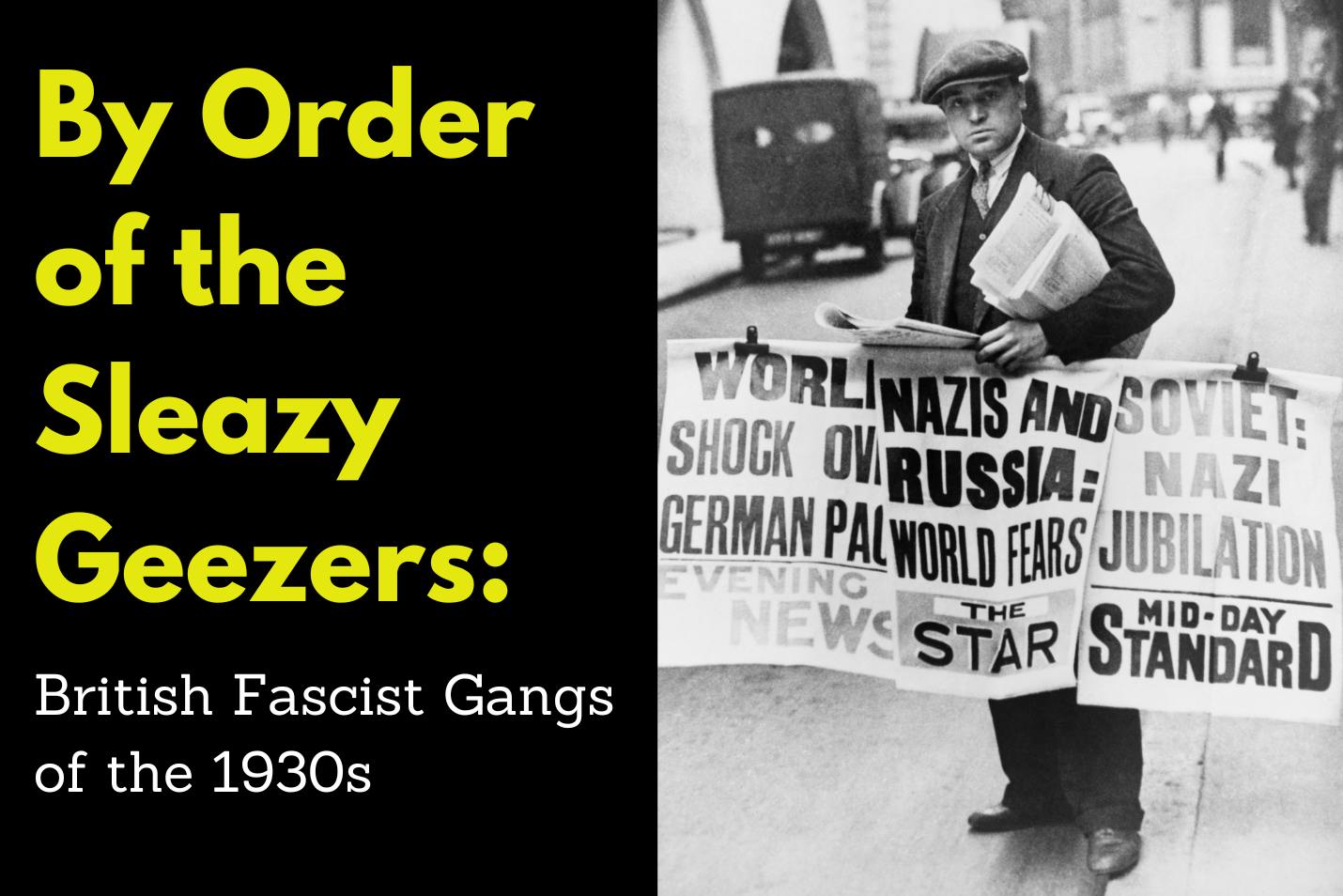
Flagstaff’s propaganda consultant, Iago Gammon, quickly recognized the potential in this new media. He formed the Shrieky Grifters, a gang of pro-fascist propagandists who could bypass the BBC’s strict broadcasting rules, which still followed the traditional Reithian principle of not giving airtime to hate-mongering spivs. The gang was known for its fierce loyalty to Flagstaff, its divisive rhetoric, and its sale of official Flagstaff-branded merchandise at massively inflated prices.
The Shrieky Grifters were behind some of the era’s most infamous conspiracy theories, like claiming Louis Pasteur’s rabies vaccine caused people to grow tails and woof. These fake stories were often used to vilify political opponents. For example, they alleged that Victorian street urchins disappeared off the streets during Edwardian times because Conservative and Labour politicians were trafficking them through a Lyons Tea Shop in Croydon. Today’s readers might find it hard to believe that so many people were gullible enough to fall for such ridiculous nonsense, but it’s important to remember this all occurred before the rise of modern fact-checking tools.
The Shrieky Grifters were soon joined by the Tecky Brothers, Gretty Garbers, Freaky Preachers, and Sleazy Grifters, who all launched their own tripodcasts. They’d make regular guest appearances on each other’s shows to boost their listening figures, sell their merchandise, and make themselves feel more important.
The biggest tripodcast star of the era – former music hall comedian Monty Barbarella – was a free speech dimwit who regularly invited Flagstaff onto his show to discuss his fascist beliefs. This went unchallenged by Barbarella, who replied with his trademark catchphrase, “Well, that’s certainly given me something to think about, vicar.”
Afterword
Flagstaff’s fascist street gangs came to an abrupt end during the Battle of Cable Street (1936), where they were beaten senseless by a coalition of Jewish groups, anti-fascists, and proto-feminist gangs like the Feisty Sisters.